

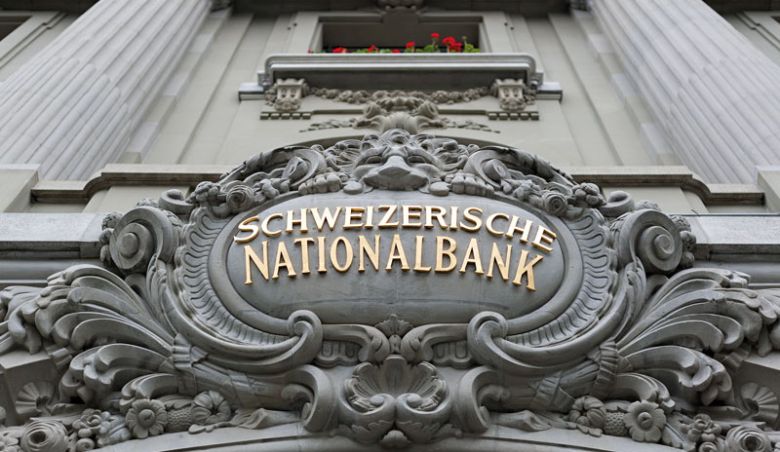
Swiss banks reject a significant share of non-resident applications. The reason is almost never the jurisdiction, it is almost always the file.
Compliance officers work from checklists, not personal impressions. If your application creates ambiguity on source of funds, business rationale, corporate structure, or geographic risk, it gets declined or, worse, flagged. A rejection in Switzerland can follow a client across institutions. Applying to a second bank without understanding what triggered the first refusal usually accelerates a second one.
The 2026 revision of Switzerland's Anti-Money Laundering Act (AMLA/GwG) extended enforcement scope, lowered the enhanced due diligence threshold from CHF 25,000 (about EUR 27.200) to CHF 15,000 (about EUR 16.300), and introduced personal liability for senior management for compliance failures. FINMA has already issued sanctions against individual bank executives under this framework.
The result: compliance officers at Swiss banks are more cautious than ever. Retail banks such as UBS and the cantonal institutions have largely stopped onboarding non-resident clients without a Swiss address or a clearly substantiated business reason. Private banks such as Pictet, Julius Baer, Lombard Odier, still accept international clients, but at minimum deposit thresholds of CHF 500,000 (about EUR 543.000) or more, and with correspondingly rigorous due diligence.
The environment is not hostile, it is selective. The institutions that service international private clients are looking for clean, well-documented profiles. The problem is that most rejected applications were not weak clients, they were just weak files.
This is the most common rejection reason by a considerable margin. Stating "business income" or "investment returns" without documentary support is not enough. Banks need a verifiable narrative.
What insufficient looks like: a founder who cannot produce share-sale contracts, a family inheritance without probate decrees, a property exit without title deeds, or two years of tax returns for a business that is six years old.
What sufficient looks like: a documented chain of evidence that connects the declared origin of funds to a specific, verifiable event, a corporate exit, an inheritance, a property transaction, a dividend history. The narrative must be coherent, chronological, and supported by primary documents at each stage.
Banks are not assessing your wealth. They are assessing their ability to explain your wealth to a regulator if asked.
Swiss banks have distinct risk appetites, and applying to the wrong institution is one of the most avoidable rejection causes. A private bank focused on European equity mandates will decline a crypto-native client. A digital broker will not service a CHF 20M (about EUR 21.7M) discretionary portfolio. A traditional Zurich institution will not onboard a complex PEP profile regardless of deposit size.
Beyond product fit, banks apply their own geographic restrictions. As of 2026, applications from residents of FATF grey-listed countries face extended timelines and enhanced due diligence as a baseline. Russian and Belarusian nationals face outright restrictions at most major institutions following the 2022 sanctions ordinance and the subsequent 2025 package, which added crypto-asset service bans for Russian residents.
Before submitting an application, the institution should match the client profile, not just on deposit amount, but on jurisdiction, business type, and transaction behaviour.
For corporate accounts, the Form A (beneficial ownership declaration) and Form K (controlling persons) requirements create a specific compliance burden. Any inconsistency between the declared UBO and the corporate structure documentation, a shareholder who appears in one document but not another, or a nominee arrangement without adequate explanation, is a direct rejection trigger.
A structure with three shareholders each holding 33% requires three complete KYC packages across three jurisdictions. Active operating companies are harder to bank than passive holding structures because transaction monitoring costs are higher. Many Swiss banks will only accept active foreign companies under specific conditions: a trade finance arrangement, a private banking anchor relationship, or an existing Swiss subsidiary.
Clients who arrive with multi-layered offshore structures and expect Swiss banking should not be surprised by pushback unless the structure has been documented and explained in advance.
A number of clients arrive with a second nationality, typically from a CBI programme, under the assumption this resolves CRS reporting obligations or geographic restrictions. It does not.
Swiss banks conduct KYC that traces back to the client's actual country of origin, primary residence, and original source of funds. A Grenadian or Vanuatu passport does not change where the money came from or how it was moved. Banks use Refinitiv's World-Check database to screen applicants against global sanctions lists, PEP registers, and adverse media. A secondary nationality acquired for mobility purposes adds complexity to the file rather than removing it, unless accompanied by genuine tax residency in the new jurisdiction.
An aspect that is underappreciated: a poorly managed rejection can have consequences beyond the immediate application. Swiss banks share information through MROS (the Money Laundering Reporting Office) when filings are made, and internal negative flags can follow a client across institutions in the jurisdiction. Submitting multiple applications to different banks in quick succession is one of the fastest ways to accumulate a compliance trail that becomes difficult to address.
The correct response to a rejection is to understand its cause before approaching another institution.
A well-prepared Swiss banking application typically includes: two or more years of tax returns, a clear Source of Wealth declaration supported by primary documentation, corporate structure charts with full UBO disclosure, a documented business rationale for the Swiss relationship, and for corporate accounts certified KYC packages for each beneficial owner. The profile should be reviewed before submission against the bank's published risk appetite and geographic restrictions.
The compliance standard has not become arbitrary, it has become rigorous. Clients who treat the banking application as a documentation exercise rather than a credibility exercise will find the process consistently more reliable.
If you are structuring a Swiss company or considering Switzerland as part of an international holding arrangement and need to ensure the banking component is properly addressed from the outset, our team can advise on structuring and preparation. Book a free initial consultation.


