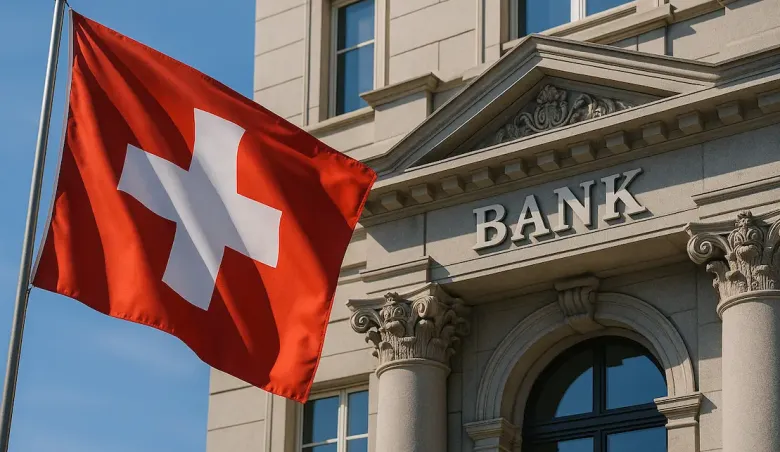
For generations, Swiss banks have stood for excellence in wealth management and attract affluent entrepreneurs from Germany, France, Italy, Spain and beyond. At a time of geopolitical uncertainty, high inflation in the eurozone and heavy regulatory pressure in the EU, Switzerland serves as a neutral, stable safe harbour for wealth. With over CHF 7.8 trillion under management, they safeguard a quarter of global private wealth and benefit from world-class regulation by FINMA.
For European entrepreneurs, who often grapple with complex tax systems, currency risks and inheritance matters, Swiss accounts offer not only security but also growth potential. Over the last 40 years, the Swiss franc has gained around 75% against the euro and the US dollar, making it an excellent diversification currency. Unlike EU banks, which are subject to bail-in rules, Swiss institutions such as cantonal banks provide unlimited depositor protection.
These banks understand the needs of HNWIs: personalised portfolios, access to exclusive investments and discreet advice that goes beyond standard custody accounts. Particularly for entrepreneurs with international business—whether in tech, property or exporting—they reduce risk through multi-currency solutions and hedging strategies.
Swiss banking secrecy emerged in 1934 with the Banking Act to protect Jewish assets from the Nazi regime—an inheritance of neutrality that continues to this day. Today it has been adapted through international agreements such as CRS (Common Reporting Standard) and AIA, but it shares only tax-relevant data with home states, not with creditors or third parties. This balance between transparency and protection makes Switzerland attractive to Europeans seeking legal diversification.
During the 2008 financial crisis, Swiss banks came through largely unscathed, unlike Lehman Brothers or Cyprus in 2013. Their core capital ratios are above 20%, roughly double the EU average. For entrepreneurs, that means: no risk of sovereign default or expropriation of the kind seen in Greece or Cyprus.
Swiss banks are among the best-capitalised in the world, with FINMA supervision that is stricter than the ECB’s. The CHF as a safe-haven currency protects against euro volatility; in 2025 it rose by 12% against the EUR. Deposits up to CHF 100,000 per client are protected by law; at cantonal banks (e.g. ZKB, BCV), unlimited protection applies via a state guarantee.
For HNWI entrepreneurs: avoidance of bail-ins (EU standard since the BRRD), where deposits above €100,000 can be written down. Instead, there are high liquidity buffers and stress tests designed to withstand global crises.
Although absolute secrecy is a thing of the past, laws such as the Swiss Civil Code protect accounts from seizure, divorce or litigation. There is no central account register, which hinders third parties. CRS reports only balances and interest to the tax authority of your home country—ideal for compliant taxpayers who still want to preserve privacy.
Entrepreneurs benefit from protection against competitors, political risks (e.g. in Hungary or Poland) or family disputes. Many use trusts or foundations in combination with Swiss accounts.
Swiss private banks offer family-office level service: dedicated relationship managers, access to club deals, private equity and alternative assets such as crypto. Personalised strategies include ESG investments, sustainable funds and philanthropic structures.
Returns: often 2–4% higher than the EU average thanks to global networks and lower correlation to markets. For entrepreneurs: tailored corporate accounts with escrow solutions for M&A transactions.
Multi-currency accounts in CHF, EUR, USD and GBP enable seamless transactions. Hedging against FX risks protects exporters (e.g. Italian machinery manufacturers against euro weakness). In addition: gold and precious-metals storage in Geneva/Zurich.
No withholding tax on interest/dividends for foreigners; income generated outside Switzerland is tax-free. Lump-sum taxation for the wealthy is possible, but CRS ensures transparency. Can be combined with holding structures in Luxembourg or the Netherlands.
Based on 2026 data, an expanded overview (AUM, services, EU focus):
Bank | AUM (bn CHF) | Minimum deposit (HNWI) | Key strengths for Europeans | Fees (p.a., all-in) | EU non-residents | Branches in the EU |
Julius Baer | 100+ | 1–2m | Global markets, ESG, tech investments | 1.0–1.5 % | Yes | London, Paris |
UBS | 500+ global | €1m | Full service, multi-asset, research | 1.2–1.8 % | Yes | Everywhere |
Pictet | 70 | 500k–1m | Discretion, family offices, art | 1.0–1.4 % | Yes | Geneva focus |
Lombard Odier | 80 | 1–5m | Sustainability, impact investing | 0.9–1.2 % | Yes | Madrid |
J. Safra Sarasin | 50 | €500k | Responsible investing, EM investments | 1.0 % | Yes | Basel |
Vontobel | 30 | 250k–1m | Crypto, digital assets, innovative | 0.8–1.2 % | Yes | Zurich |
Maerki Baumann | Small | 500k | Crypto-friendly, independent | 0.7–1.0 % | Yes | Zurich |
EFG International | 40 | 1m | Entrepreneur focus, venture capital | 1.1–1.5 % | Yes | Geneva/Zurich |
Choose the right bank depending on your assets and your individual risk profile. Independent asset managers can also noticeably reduce total costs.
Preparation: Gather passport/ID, proof of address (bill <3 months), TIN/tax number, proof of income (tax assessment for 2 years), and source of wealth (financial statements, contracts). For companies: commercial register extract, turnover figures.
Choosing a bank: do an online check or contact an adviser. Recommended: an in-person appointment in Zurich/Geneva to build trust (video identification is possible).
Application: online form + uploads. KYC checks (AML) take 1–4 weeks; PEP status extends the timeline.
Activation: pay in the minimum deposit (by wire transfer). Online banking with multi-factor authentication.
Tips for cross-border commuters (DE/AT/FR/IT): easier access via Raiffeisen or PostFinance. No SCHUFA, but full traceability of funds is required.
Account maintenance: free from CHF 500k, otherwise CHF 100–300/year.
Custody fees: 0.35–0.5% p.a.
Management: 1–1.5% on AUM (lower for volumes >10m).
Transactions: 0.3% custody + FX 0.5–1%.
All-in models: 0.8–1.2% incl.
Comparison: cheaper than Monaco/Luxembourg, more stable than the UK post-Brexit. Independent family offices save 0.3–0.5%.
The Common Reporting Standard (CRS), in force since 2018, enables automatic exchange of information with more than 100 countries. You should therefore voluntarily declare your account to the relevant authorities in your home country to avoid potential penalties. There is no reporting obligation for opening the account itself, for example under § 138 AO in Germany. Because Switzerland is not an EU member, neither PSD2 requirements nor bail-in rules apply. In addition, double taxation treaties (DTAs) with all EU states prevent double taxation.
For entrepreneurs, holding accounts are excellent for optimising cash flow. Succession planning can also be implemented effectively via foundations.
Disclaimer: This article provides general information and does not constitute individual tax or legal advice. Specific arrangements should always be agreed with a tax adviser or specialist lawyer for international tax law.
Italian tech founder: diversified 30% of wealth with Pictet, +15% return in 2025 thanks to hedging.
French property magnate: asset protection against an inheritance dispute with Lombard Odier.
Spanish exporter: multi-currency at Julius Baer provided protection against the euro’s decline.
Diversify: keep no more than 30% with Swiss banks.
Choose specialists (not universal banks like Credit Suisse before the UBS takeover).
Combine with insurance (e.g. Zurich Life).
Avoid: deposits that are too low, unclear source-of-funds documentation.
Use apps like TWINT for day-to-day use, and powers of attorney with limits.
In addition: regular reviews with advisers optimise portfolios.
With its progressive crypto regulation and strong focus on ESG criteria (Environmental, Social, Governance), Switzerland remains a pioneer in international wealth management. New FINMA guidelines significantly simplify the tokenisation of assets by creating clear frameworks for digital assets. For EU entrepreneurs, this offers an ideal hedge against recession risks, as it enables innovative, diversified investment opportunities within a stable regulatory environment.
For European high-net-worth individuals (HNWIs), a Swiss bank account represents far more than a simple custody account. It embodies a strategic advantage for long-term wealth protection, growth and diversification in uncertain times. The unique combination of stability, discretion and innovative wealth-management services makes Switzerland the ideal partner for entrepreneurs across Europe who want to protect their assets from inflation, currency risk and geopolitical turbulence.
Contact us today for a no-obligation initial consultation and start diversifying your wealth in Switzerland now.
Yes, EU citizens without Swiss residency can generally open an account with most private banks, provided they meet KYC (Know Your Customer) requirements. This typically includes a valid passport, proof of address, tax identification number (TIN), and evidence of the source of wealth such as tax returns or company financial statements. The process usually takes 1–4 weeks and can be completed online or on site.
Minimum deposits vary by bank, but for high-net-worth clients they are usually between CHF/EUR 250,000 and 2 million. Banks such as Vontobel start at CHF 250,000, while Julius Baer or UBS often expect €1 million as an entry point. At higher volumes, fees decrease proportionally, making the costs more economical.
For non-residents, Switzerland does not levy taxes on income or interest from the account as long as it is generated outside Switzerland. Under the Common Reporting Standard (CRS), balances and earnings are automatically reported to the tax authority in your home country, so you must declare them there. Double taxation treaties with EU states prevent double taxation.