Singapore has built a reputation as one of the easiest and most reliable places in the world to start a business. For many entrepreneurs, it feels like the perfect combination of credibility, efficiency, and tax friendliness. The process is fast, the legal system is extremely stable, and everything seems designed to support international companies.
Because of this, thousands of founders decide to set up a Singapore company every year. And naturally, many of them look for the fastest and cheapest way to get it done.
At first glance, that decision makes sense. If incorporation is just a formal step, why spend more than necessary?
The problem is that incorporation is not just a formality. It is the foundation of your entire business structure, and if that foundation is weak, everything built on top of it becomes unstable.
There is no doubt that Singapore offers real advantages. The corporate tax system is competitive, the country has strong international credibility, and banks and payment providers are generally comfortable working with Singapore entities. On top of that, the setup process itself is relatively straightforward compared to many other jurisdictions.
However, what often gets overlooked is that Singapore is also a highly regulated environment. While it is business-friendly, it expects companies to operate properly, maintain records, and comply with ongoing obligations. It is not a jurisdiction where you can set up a company and then ignore it.
This is where the gap begins to appear between a proper setup and a careless one.
Most low-cost incorporation providers focus on speed and volume. Their job is to get your company registered as quickly as possible, and in that sense, they usually do what they promise.
You will receive a registered company, a local nominee director, and a legal address. On paper, everything is in place and your company exists, but beyond that, there is very little substance. There is usually no real discussion about how your business operates, where your clients are located, or how your income flows. There is no planning around tax exposure, limited resources on how to structure control, and no explanation of your responsibilities as a director or shareholder. In other words, you get a company, but not a structure.
One issue that rarely gets discussed openly is how the quality of your provider can affect how your company is perceived, even if your own business is completely legitimate. In Singapore, many companies share the same registered address, and that in itself is normal. However, problems start to arise when that address is also used by companies involved in high-risk or non-compliant activities. Even if you are not connected to those activities, the association can still trigger additional scrutiny from banks and payment providers.
A similar pattern appears when the same address shows up repeatedly across setups that have already been flagged or considered suspicious. If your company is linked to an address that appears frequently in problematic structures, it increases the likelihood of delays, additional checks, or outright rejection during onboarding.
In some cases, several companies linked to the same address may have already been shut down, struck off, or flagged for compliance issues. Over time, addresses associated with this kind of activity can develop a negative profile, even if no single company is directly at fault.
One other thing to be aware of is banks tend to ask detailed questions about your business. They want to understand what you do, where your clients are, and who actually controls the company. If your setup was done without proper thought, it becomes difficult to provide clear answers, and that can lead to delays or even rejections.
The same logic applies to nominee directors, when the same individual is assigned to dozens or even hundreds of unrelated companies. From a compliance perspective, this creates a pattern that looks more like mass incorporation than a carefully managed business setup. As a result, companies using such nominee arrangements may face difficulties opening bank or payment platforms accounts such as PayPal.
PayPal accounts may be rejected or frozen without much explanation, onboarding with Stripe or similar platforms can become difficult, and banks may delay or reject account applications.
Singapore companies are required to maintain accounting records, file annual returns, and submit tax filings. Negligent providers rarely guide clients through this properly, which means many founders miss deadlines without realizing it. Over time, this leads to penalties and, in some cases, the risk of the company being struck off.
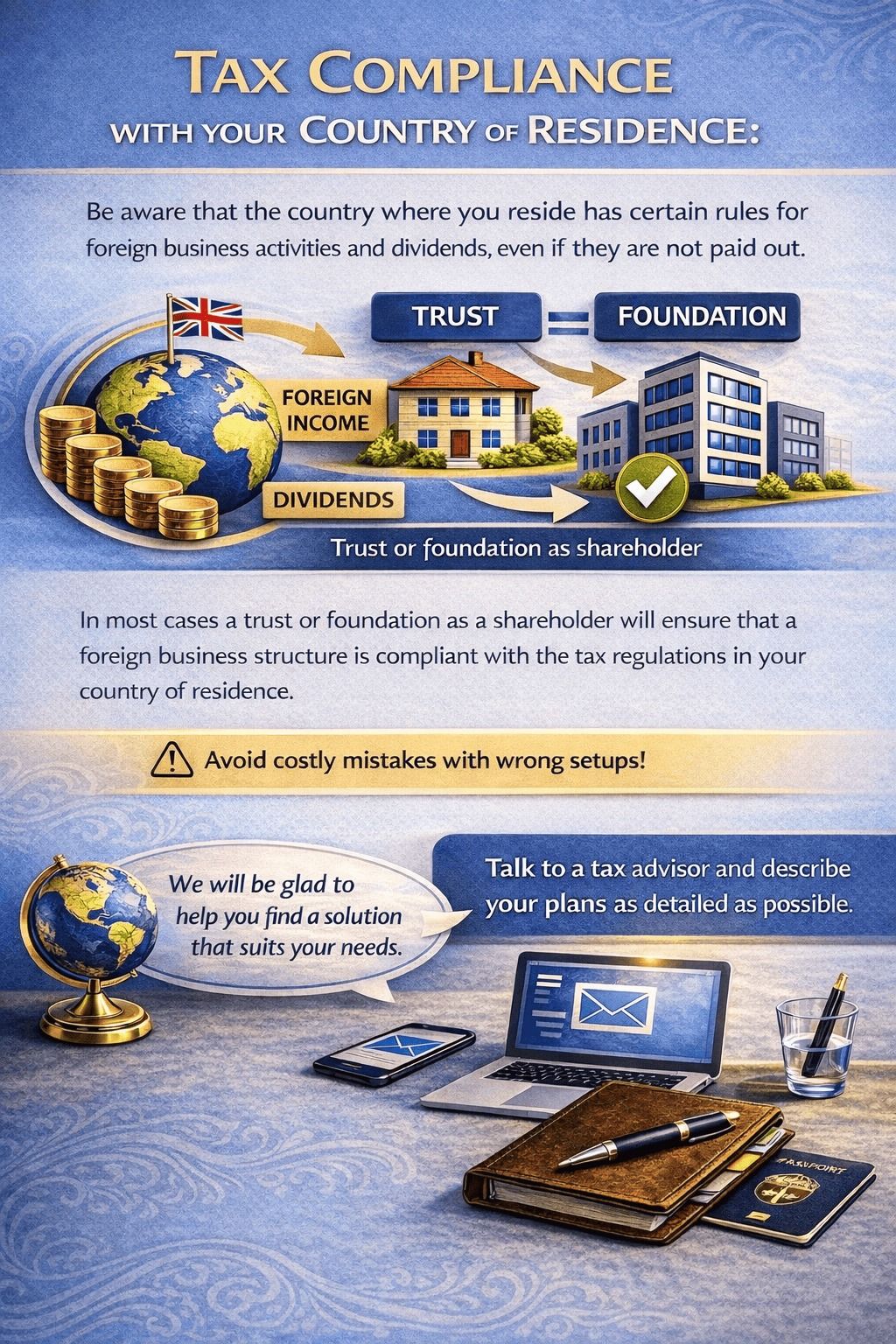
And then there is the tax side, which is usually the most misunderstood part. Singapore does offer favorable tax treatment in many cases, but it does not automatically eliminate tax obligations elsewhere. Your personal residency, the location of management, and the source of your income all play a role.
Therefore, it is often recommended to hold the company through an ownership structure, such as trust or a foundation rather than owning it directly as an individual. We can assess your situation and guide you through the most suitable structure. You can schedule a free initial consultation with our team to get clear, practical advice before making any decisions.
A well-structured Singapore company should not feel like a generic product. Instead, it should reflect your actual business and personal situation which means understanding how you generate income, where you are based, and how you plan to grow. It also means setting up the company in a way that aligns with those factors, rather than forcing you into a one-size-fits-all template.
When this is done correctly, things tend to work much more smoothly. Banking becomes easier because your structure makes sense, compliance is manageable because you understand your obligations and most importantly, you reduce the risk of unpleasant surprises later on.
If you are planning to set up a company in Singapore, or if you already have one and are unsure whether it has been structured correctly, it is worth taking a step back. We can review your situation, explain where the risks are, and guide you toward a structure that actually works. You can schedule a free initial consultation to get clear, practical advice before moving forward.